Why Understanding Composite Decking Matters for Your Investment
Understanding the composite decking advantages and disadvantages is key before investing in your outdoor living space. This modern material—a blend of wood fibers and recycled plastic—offers durability and low maintenance, but it has trade-offs that may not suit every homeowner.
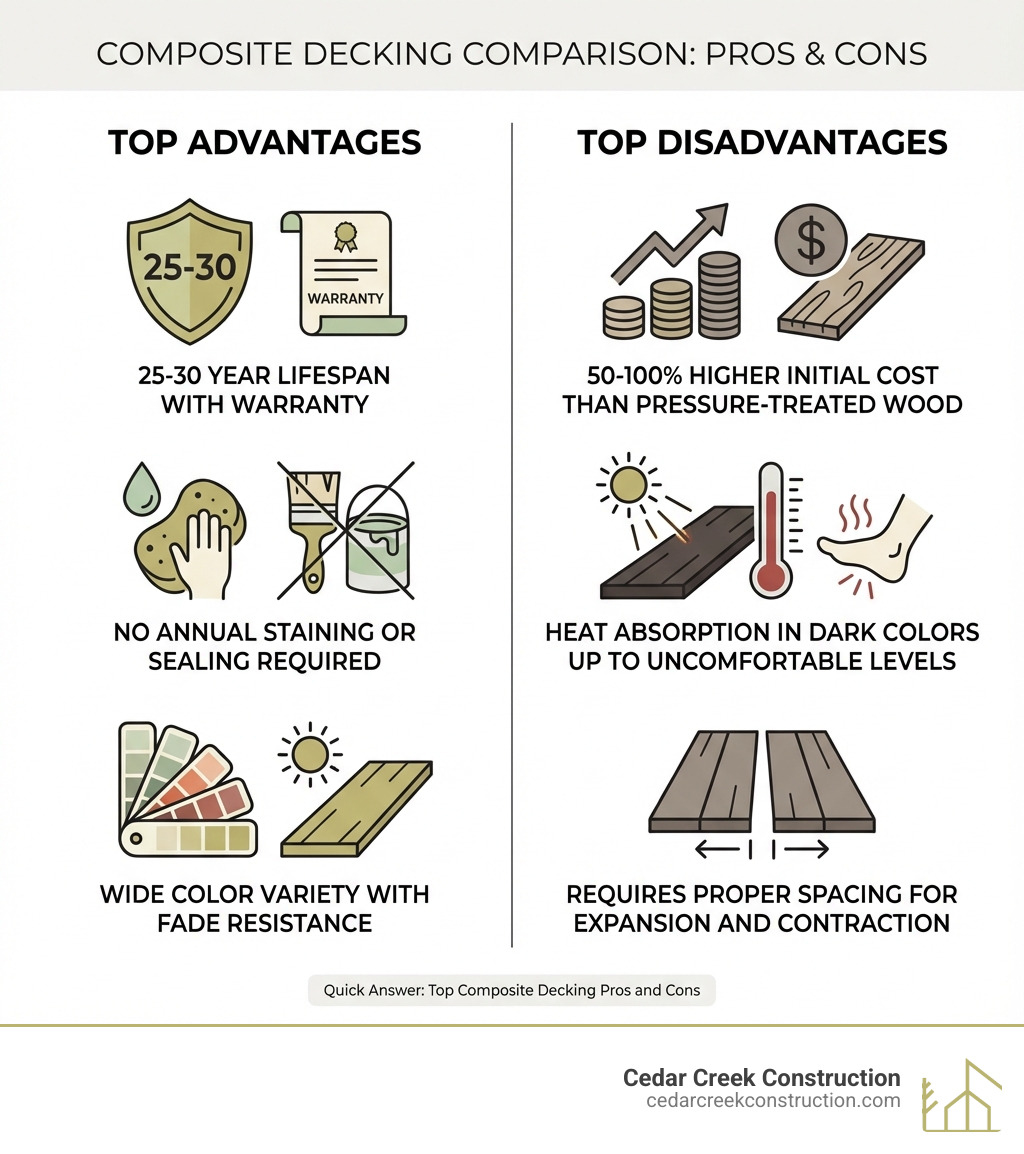
Quick Answer: Top Composite Decking Pros and Cons
Advantages:
- Durability – Lasts 25-30+ years, resisting rot, insects, and warping.
- Low Maintenance – No annual staining or sealing; simple soap-and-water cleaning.
- Aesthetics – Wide range of fade-resistant colors and realistic wood-grain textures.
Disadvantages:
- Higher Upfront Cost – More expensive initially than pressure-treated wood.
- Heat Retention – Dark colors can get hot in direct sun.
- Not Natural Wood – Has a manufactured look and cannot be refinished.
As you consider a new deck, you’re likely wondering if composite’s higher price is justified. While the industry is large, that doesn’t automatically make it the right choice for your Lehigh Valley home.
I’m Matt Strunk, and my experience in construction has shown me that a clear understanding of these pros and cons is crucial for making a confident investment. This guide will walk you through the details to help you decide.
The Advantages: Why Homeowners Choose Composite Decking
When weighing composite decking advantages and disadvantages, the benefits often start with durability and minimal upkeep. For homeowners in the Lehigh Valley, these factors are top priorities, meaning more time enjoying your deck and less time working on it.

Best Durability and Lifespan
One of the most compelling reasons to choose composite decking is its remarkable durability. Unlike wood, composite is engineered to resist rot, mold, and insects like termites, which are common issues in Pennsylvania’s humid summers. It is also far less prone to cracking, splitting, or warping, maintaining its structural integrity for decades.
In terms of lifespan, a wood deck might last 10-15 years, whereas composite decking can last 25-30 years or more. Many high-quality products come with 25- to 50-year warranties, offering long-term peace of mind. This longevity means fewer repairs and replacements, saving you hassle and money.
Composite decking is also designed to withstand our region’s variable weather, from hot summers to freezing winters. Its resistance to temperature fluctuations and freeze-thaw cycles means your deck won’t swell or contract excessively, preventing structural problems. For more insights into durable decking options, you can explore what makes composite decking ideal for your home.
Exceptionally Low Maintenance
One of composite decking’s biggest selling points is its low-maintenance nature. This material is designed for busy homeowners who want to enjoy their deck without the constant upkeep that wood demands. With composite, the annual cycle of sanding, staining, and sealing is over.
This translates into significant long-term savings on materials and labor. So, what does “low maintenance” entail? For most, it’s just a simple, occasional cleaning with soap and water to remove dirt and debris. Its non-porous surface naturally resists mold and mildew, which means less scrubbing and a healthier outdoor environment.
This means more free time for you and your family. No more splinters, no more fading, and no more painting—just a beautiful deck ready to be enjoyed. To learn more about the kind of repairs you can avoid, check out our insights on information on deck repairs you can avoid.
Superior Aesthetics and Design Flexibility
Beyond its practical benefits, composite decking offers incredible aesthetic appeal and design flexibility. Modern composites have evolved far beyond their early, artificial look, now offering a vast range of colors and realistic wood-grain textures to complement any home style in Allentown, Macungie, or Emmaus.
Unlike wood, which fades and requires re-staining, composite decking holds its color for years. This color consistency ensures your deck looks great long after installation without you ever lifting a paintbrush. Minor scratches are also less noticeable since the color is consistent throughout the board.
Safety is another key benefit. The splinter-free surface is perfect for families with children and pets, allowing everyone to walk barefoot without worry. For a clean, high-end finish, many composite systems use hidden fasteners, which eliminate visible screws on the deck surface. This creates a seamless look that lifts your outdoor space from a simple platform to a beautifully designed extension of your home.
The Disadvantages: What to Consider Before Buying
While composite decking has many benefits, it’s important to consider the drawbacks. Understanding these points in the composite decking advantages and disadvantages discussion will help clients in Easton and beyond make the best choice for their home.
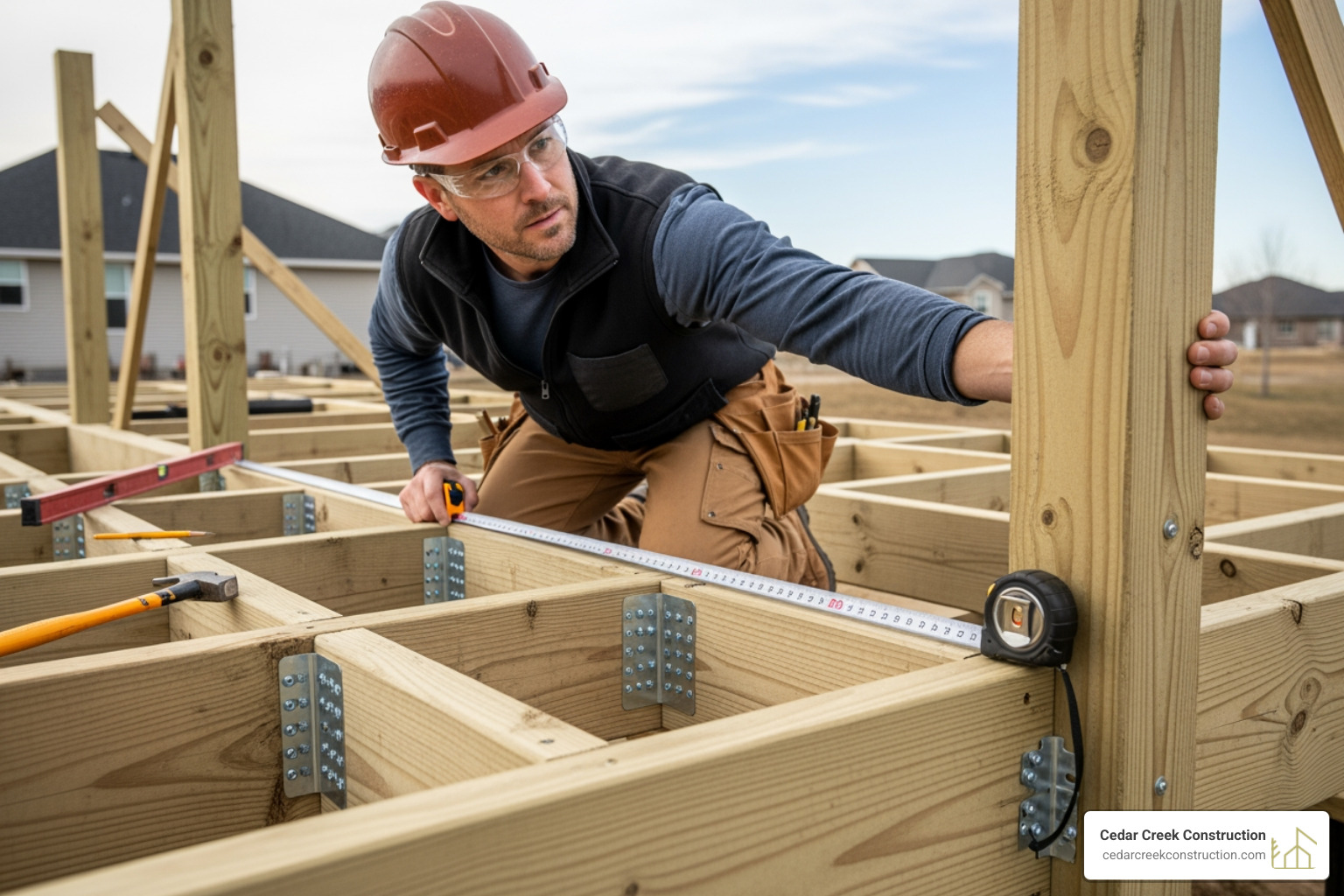
The Higher Upfront Cost
The most significant factor for many homeowners is the higher initial cost of composite decking compared to pressure-treated pine. Composite materials can cost 15% to 100% more than wood, though they may be cheaper than some exotic hardwoods.
To illustrate, here is a hypothetical 20-year cost comparison for a 300 sq. ft. deck. (Estimates vary based on design, labor, and materials.)
| Decking Type | Initial Cost (300 sq. ft. deck) | Annual Maintenance | Total Cost Over 20 Years |
|---|---|---|---|
| Pressure-Treated Wood | $10,000 – $12,000 | $300 – $500 | $16,000 – $22,000 |
| Composite Decking | $15,000 – $20,000 | $50 – $100 | $16,000 – $22,000 |
As the table shows, while the initial investment is higher, reduced maintenance costs can make the total cost of ownership for composite similar to wood over time. For a precise quote, we encourage you to get a free estimate for your project.
Potential Performance and Installation Issues
While durable, composite decking isn’t perfect. Here are a few performance issues to be aware of:
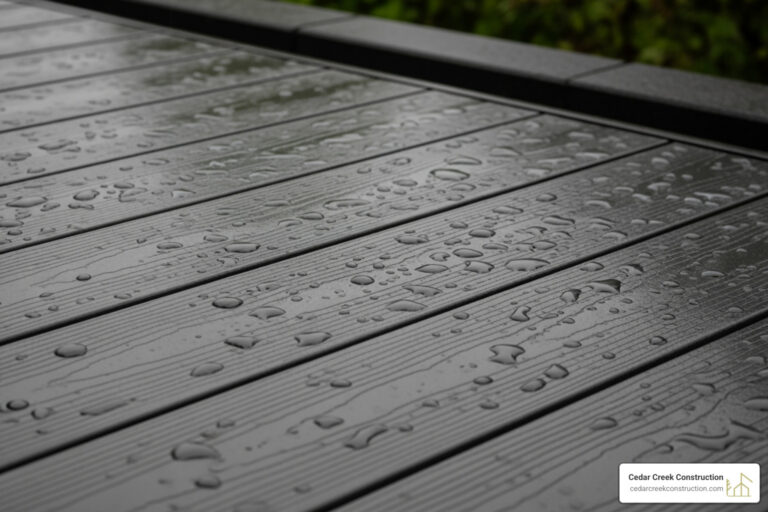
- Heat Retention: Dark-colored boards can get hot in direct sunlight. Choosing lighter colors or adding shade can mitigate this in hot Lehigh Valley summers.
- Expansion and Contraction: Composite boards expand and contract with temperature changes. Proper installation with correct gapping (typically 1/8 to 3/16 inch) is crucial to prevent buckling or warping. This makes professional installation highly recommended.
- Scratching: While resistant, composite can be scratched by sharp objects like metal snow shovels. Always use a plastic shovel or broom for snow removal.
- Slipperiness: Some composite textures can be slippery when wet. If this is a concern, especially around a pool, we can recommend options with improved traction. For more technical details, see this technical guide on working with composite decking.
It’s Not Natural Wood
For some, the biggest drawback is that composite isn’t natural wood. Despite technological advances, it can’t perfectly replicate the unique, organic aesthetic of real timber.
- Cannot Be Refinished: A key trade-off for low maintenance is that you can’t sand or re-stain composite decking. The color you choose is the color you’ll have for the life of the deck.
- End-of-Life Disposal: While often made from recycled materials, composite decking is not biodegradable and will likely end up in a landfill.
- Weight: Composite boards are heavier than wood, requiring a robust, properly engineered substructure to support the added weight.
For a broader look at material options, you might find this overview of various decking materials helpful.
Composite Decking Advantages and Disadvantages: Making the Right Choice
Deciding on the right decking for your home in Coopersburg or anywhere in the Lehigh Valley means weighing your budget, priorities, and long-term vision. Let’s break down the key factors in the composite decking advantages and disadvantages debate.
Calculating the Long-Term Return on Investment
While the upfront cost is higher, it’s crucial to consider the long-term return on investment (ROI). As our cost table showed, the savings on maintenance can make composite as cost-effective as wood over the deck’s lifespan. Beyond direct savings, a beautiful, low-maintenance composite deck is a desirable feature that can increase your property value, appealing to future buyers who want to avoid the upkeep of wood.
Manufacturer warranties, often ranging from 25 to 50 years for defects, fading, and staining, provide peace of mind and protect your investment in a way that wood cannot. Learn more about how to choose the best material for your new deck.
Key composite decking advantages and disadvantages for Pennsylvania Weather
Pennsylvania’s four-season climate makes material choice critical. Composite decking’s resistance to mold and mildew is a major plus in our humid summers. During our cold, snowy winters, it truly shines by resisting damage from the freeze-thaw cycle that can cause wood to crack and splinter. Modern capped composites also include UV inhibitors to resist fading from the harsh summer sun, keeping your deck’s color vibrant for years. For a detailed comparison, see our article on comparing Trex vs. Wood in Pennsylvania.
Capped vs. Uncapped: A Crucial Decision
Understanding the difference between “capped” and “uncapped” composite is vital. Early generations of composite were uncapped, leaving the wood-plastic core exposed and vulnerable to staining, fading, and mold.
Modern, high-performance decking is “capped” with a protective polymer shell bonded to the core. This outer layer is the key to its superior performance.
Benefits of Capped Composite:
- Stain & Fade Resistance: The cap has UV inhibitors and prevents spills from soaking in.
- Scratch Resistance: The durable shell protects against scuffs and scrapes.
- Mold & Mildew Protection: The non-porous surface blocks moisture and fungal growth.
While uncapped composite is cheaper initially, it lacks these critical protections. We almost exclusively recommend modern capped composites, as their superior durability and appearance retention offer a much better long-term value. This is why capped composite is consistently among the top decking materials recommended by local builders for your next project in Lehigh Valley, PA.
Frequently Asked Questions about Composite Decking
Here are answers to common questions about composite decking advantages and disadvantages from homeowners in Center Valley, Coopersburg, and Allentown.
Is composite decking completely maintenance-free?
No, it is low-maintenance, not no-maintenance. You’ll never have to sand, stain, or seal it. However, it does require periodic cleaning with soap and water to remove surface dirt and debris. This simple upkeep prevents grime buildup and keeps your deck looking its best, a far cry from the intensive labor required for wood.
Can you repair a scratched composite deck board?
Repairing scratches on composite is difficult. Unlike wood, it cannot be sanded or refinished. While very minor scuffs can sometimes be blended with a heat gun (a delicate process), the most effective solution for a deep scratch or significant damage is to replace the entire board. This is why choosing a high-quality, scratch-resistant capped composite is a smart investment.
Does composite decking increase home value?
Yes, a composite deck generally provides a strong return on investment (ROI) and increases home value. Homebuyers are increasingly seeking move-in-ready outdoor living spaces, and the low-maintenance appeal of composite is a major selling point. Its durability and modern aesthetic signal a high-quality, hassle-free feature that adds tangible value and can lead to a higher sale price.
Is a Composite Deck the Right Choice for Your Lehigh Valley Home?
After exploring the composite decking advantages and disadvantages, the right choice for your Lehigh Valley home comes down to balancing initial investment with long-term benefits.
In summary, composite decking is a long-term investment in durability and low maintenance. While it has a higher upfront cost and doesn’t replicate natural wood perfectly, its resistance to rot, insects, and fading—plus the time and money saved on upkeep—makes it a compelling choice for many homeowners.
Composite is ideal if you prioritize durability, minimal upkeep, and a consistent aesthetic over the lowest initial cost. If you want a deck that will withstand Pennsylvania weather for decades with little effort and add value to your home, composite is an excellent option.
Here at Cedar Creek Construction, we specialize in building high-quality outdoor living spaces across the Lehigh Valley, from Center Valley to Easton. We partner with you to design and build a custom deck that fits your lifestyle and budget, drawing on our expertise with local climate and building codes.
Ready to transform your backyard into the outdoor oasis you’ve always envisioned? Start designing your new deck today and let us help you bring your vision to life!