Why Homeowners Are Choosing Aluminum for Their Decks
Aluminum deck railing is changing outdoor living spaces across the Lehigh Valley, offering homeowners a perfect blend of durability, style, and minimal upkeep. If you’re comparing deck materials, here’s what makes aluminum stand out:
Quick Comparison: Aluminum vs. Other Railing Materials
| Feature | Aluminum | Wood | Vinyl | Composite |
|---|---|---|---|---|
| Maintenance | Low – wash annually | High – stain/seal yearly | Medium – wash regularly | Medium – clean regularly |
| Durability | 25-30+ years | 10-15 years | 15-20 years | 20-25 years |
| Rust/Rot | Rust-proof | Prone to rot | Won’t rot | Won’t rot |
| Initial Cost | Medium-High | Low | Medium | Medium-High |
| Warping | Never warps | Common issue | Can sag | Minimal |
The research is clear: aluminum railing systems can last decades with little maintenance required, unlike wood which needs frequent repainting and staining. With a rigorous 10-step powder-coating process that’s the most stringent in the industry, aluminum railings withstand harsh Pennsylvania weather without rusting, splintering, or warping.
One homeowner looking at modern deck design put it simply: “Don’t sacrifice design to add safety to your deck.” That’s exactly what aluminum delivers – clean lines, slim profiles, and a modern aesthetic that complements any architectural style. With 12+ powder-coated color combinations available from leading brands, you can customize your outdoor space without worrying about maintenance or wear and tear.
As an experienced construction advisor for modern outdoor living solutions, I’ve seen that homeowners who invest in quality materials like aluminum deck railing systems save thousands in maintenance costs over the life of their deck.
Why Aluminum Railing is a Superior Choice for Modern Decks
When enhancing outdoor living spaces in the Lehigh Valley, from Center Valley to Allentown or Easton, aluminum deck railing is a top contender. It offers a compelling combination of benefits that other materials can’t match.
First is its incredible durability. Unlike wood, which is prone to rot and insects, aluminum withstands Pennsylvania’s harshest weather. This inherent strength means your railing won’t rust, splinter, or warp, holding its form for decades to keep your deck safe and beautiful.
Then there’s the low-maintenance aspect. Forget spending weekends sanding, staining, or painting. Aluminum’s rust-proof nature and advanced finishes mean you spend more time enjoying your deck and less time maintaining it. It’s a preferred material for outdoor railings due to its durability and easy care.
Beyond its practical advantages, aluminum’s lightweight strength is a significant factor. It’s naturally strong yet surprisingly light, making it easier to handle during installation (though we always recommend professional installation for safety). This strength provides a secure barrier without feeling bulky.
For more information on how different materials stack up for your deck, check out our guide on More info about deck material options.
Key Features to Consider When Selecting an Aluminum Deck Railing
Choosing the right aluminum deck railing system involves more than just color. We guide our clients in Macungie, Emmaus, and throughout the Lehigh Valley through several key considerations to ensure their railing meets their needs.
One of the most critical factors is height and width. Building codes are non-negotiable for safety. Residential railings are generally required to be at least 36 inches high if the deck is over 30 inches off the ground. Commercial applications typically demand a 42-inch minimum. We ensure all our installations meet or exceed these local codes.
The color and finish options for aluminum are impressive. Leading brands like Westbury and TimberTech offer a wide array of choices, with Westbury alone boasting 12 powder-coated combinations. From classic black to textured bronze, you can find a color to complement your home. Powder-coating is a dry finishing process that creates an “eco-friendly and super tough” surface. Look for railings that adhere to the AAMA 2604 standard, which indicates high durability for exterior applications.
Infill options allow for significant customization. You can choose from traditional pickets, sleek glass slats for an unobstructed view, contemporary cable railing, or even horizontal balusters. Each option dramatically changes your deck’s look.
Finally, consider the top rail styles. Some systems offer a classic top rail, while others are more modern. A popular option is the “Drink Rail,” designed to hold drinks by integrating your deck boards as a functional top surface.
To explore the attractive, high-performance design possibilities of aluminum railings further, visit Choose Aluminum Railing for an Attractive, High-Performance Design.
Warranty and Longevity
One of the most compelling reasons our clients in Coopersburg and beyond choose aluminum deck railing is its exceptional warranty and longevity. This isn’t a material you’ll replace in a few years.
An aluminum railing system can last decades with little maintenance required. While other materials might demand frequent re-painting or replacement, aluminum stands strong. Reputable brands back their products with impressive guarantees. For instance, TimberTech offers an industry-leading 25-Year Limited Warranty. Deckorators provides a 10-year limited salt/coastal water applications warranty, which speaks volumes about its durability.
This long lifespan means your initial investment pays dividends, saving you money and hassle. When we install aluminum deck railing, we’re installing a durable, beautiful, and long-lasting feature that will improve your home for decades. We also look for brands with strong customer support to ensure any future needs are met efficiently.
Aluminum vs. Other Materials: A Head-to-Head Comparison
Choosing the right railing material for your deck is a big decision, and it often comes down to balancing aesthetics, maintenance, durability, and cost. Let’s pit aluminum deck railing against its common rivals to see how it truly stacks up.
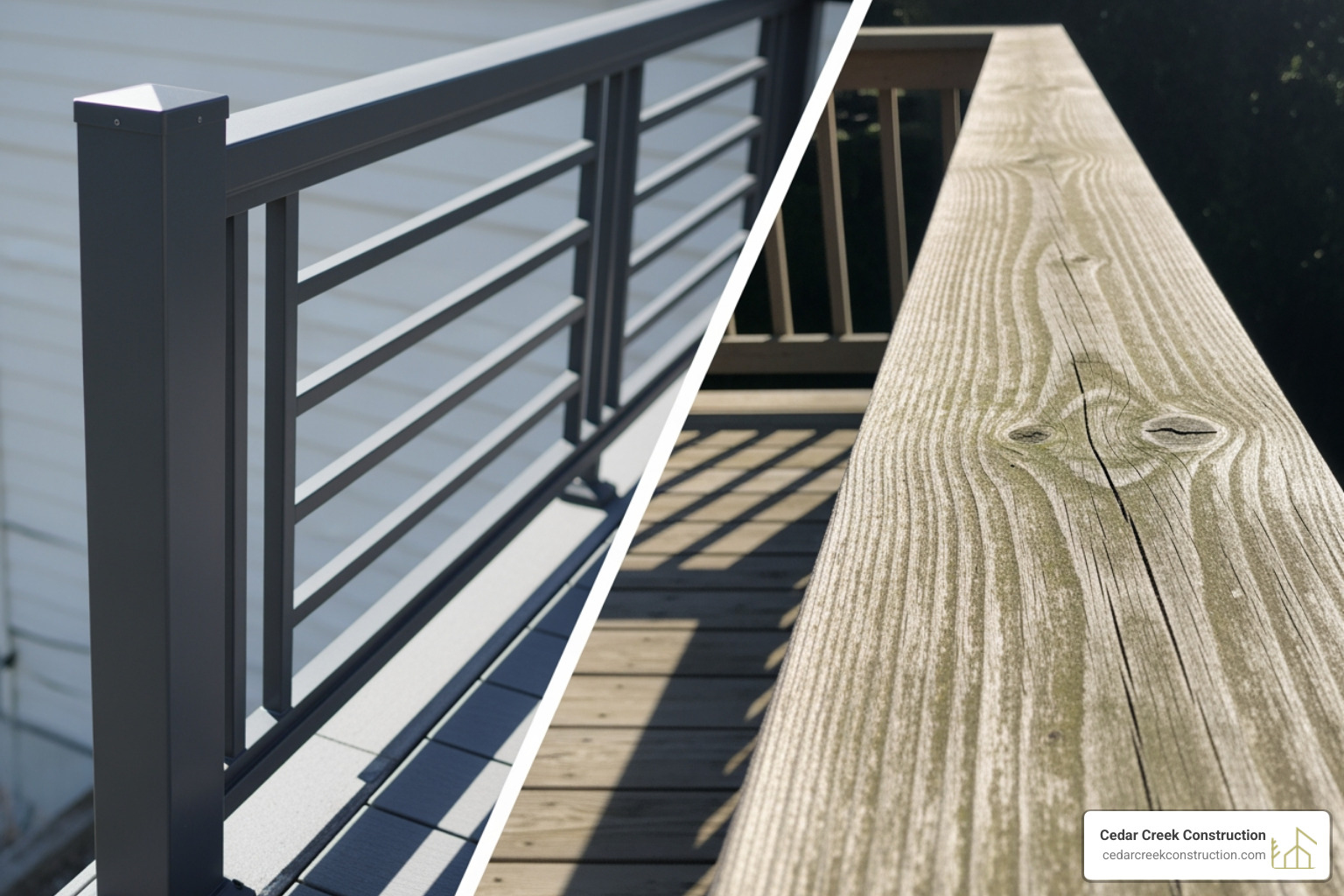
Here’s a more detailed look at the comparison:
| Feature | Aluminum | Wood | Vinyl | Composite |
|---|---|---|---|---|
| Durability | 25-30+ years, weather-resistant, rust-proof | 10-15 years, prone to rot, insects, splintering | 15-20 years, can become brittle in cold, sag in heat | 20-25 years, resistant to rot/insects, can fade/stain |
| Maintenance | Low: annual cleaning with soap and water | High: annual sanding, staining/painting, sealing | Medium: regular washing, can attract mildew | Medium: regular cleaning, occasional scrubbing for stains |
| Upfront Cost | Medium-High | Low | Medium | Medium-High |
| Long-Term Value | Excellent: minimal lifetime cost, high ROI | Moderate: high lifetime cost due to maintenance/replacement | Good: moderate lifetime cost, some replacement needs | Very Good: low lifetime cost, good ROI |
| Aesthetics | Sleek, modern, wide range of colors/infill | Classic, natural, can weather/gray over time | Limited styles, can look plastic-y | Mimics wood, but with consistent finish, less natural feel |
| Warping/Splintering | Never | Common issue, especially with weather exposure | Can sag or become brittle, but won’t splinter | Minimal, but can expand/contract with temperature |
Aluminum vs. Wood
The classic debate for outdoor structures often starts here. While wood offers a traditional aesthetic and a lower initial cost, the long-term reality is quite different. Wood deck railings, even in the dry parts of Center Valley, require constant attention. This means annual staining and sealing to protect against moisture, UV rays, and insect damage. Without it, you’ll quickly see warping and splintering, not to mention rot and decay.
Consider the time and money spent on maintenance: the cost of stains, sealers, brushes, and your valuable weekend hours. Over the lifespan of a deck, these maintenance expenses can quickly erase any initial savings. Aluminum deck railing, on the other hand, requires virtually none of this. A simple wash with soap and water once a year is usually all it takes. While the upfront cost for aluminum might be higher, its lifetime cost is often significantly lower when you factor in maintenance, repairs, and eventual replacement.
For a deeper dive into how different decking materials compare, especially concerning durability in Pennsylvania weather, read our comparison of Trex vs. Wood.
Aluminum vs. Vinyl & Composite
When we compare aluminum deck railing to vinyl and composite options, we enter a field of more modern materials, but with distinct differences.
Vinyl railing is also low-maintenance and won’t rot or splinter. However, it can sometimes lack the rigidity and strength of aluminum. Over time, vinyl can sag, especially in longer spans, and its aesthetic is often limited, sometimes appearing more “plastic-y” compared to the crisp lines of aluminum. While it won’t corrode, extreme cold can make it brittle, and intense heat can sometimes cause warping or discoloration.
Composite railing (distinct from composite decking) shares many low-maintenance benefits with aluminum, including resistance to rot and insects. However, composite materials can sometimes be prone to fading or staining over time, depending on the quality and specific formulation. They also might not offer the same slender, minimalist profiles that aluminum excels at, often appearing bulkier.
One of the great advantages of aluminum deck railing is its inherent strength and rigidity, allowing for longer spans without sagging and providing a more secure feel. Its color fade resistance, thanks to advanced powder-coating, means your railing will maintain its vibrant look for years. Furthermore, aluminum railings are perfectly compatible with composite decking, creating a cohesive and low-maintenance outdoor living space that homeowners in places like Coopersburg and Emmaus absolutely love. For more on the benefits of composite decking, take a look at Why composite decking is ideal.
Cost Factors for an Aluminum Deck Railing
Understanding the cost factors for an aluminum deck railing system is essential for budgeting your project in the Lehigh Valley. While it’s generally considered a mid-to-high-range option upfront, its value becomes clear over time.
The price per linear foot is the primary cost driver, but this can vary significantly based on several elements:
- Brand and style: Different manufacturers and their product lines come with varying price points. For example, Superior Aluminum’s Series 6E might be a more budget-friendly option, while their Series 9C (cable railing) or 9M (mesh railing) carry higher price points due to their premium aesthetic and components.
- Picket vs. cable vs. glass: The infill choice dramatically impacts cost. Traditional picket infills are typically the most economical. Cable rail systems, with their sleek look and stainless steel components, tend to be more expensive. Glass panel railing, offering unobstructed views, is often at the higher end of the spectrum due to the cost of tempered glass.
- Professional installation vs. DIY: While some aluminum deck railing kits are marketed as DIY-friendly, professional installation ensures proper adherence to building codes, optimal safety, and a flawless finish. The labor cost for professional installation will be a significant part of your overall project budget, but it’s an investment in quality and peace of mind.
- Customization: Unique colors, specialized post caps, integrated lighting, or custom configurations (like curved sections) will add to the total cost.
While aluminum deck railing might have a higher initial investment than, say, a basic pressure-treated wood railing, its long-term cost is often lower due to minimal maintenance and exceptional durability. This makes it a smart investment for adding lasting value to your home in Allentown or Center Valley.
To get a clearer picture of what your project might entail, we offer free estimates. You can learn more by visiting Get a free estimate in the Lehigh Valley.
Exploring Styles and Brands of Aluminum Deck Railing
One of the most exciting aspects of choosing aluminum deck railing is the sheer variety of styles and innovative brands. Whether you’re aiming for a minimalist modern look or a traditional aesthetic for your deck in Easton or Macungie, aluminum offers incredible design flexibility. Its strength allows for slender profiles, creating clean sightlines that make your outdoor space feel larger and more open.
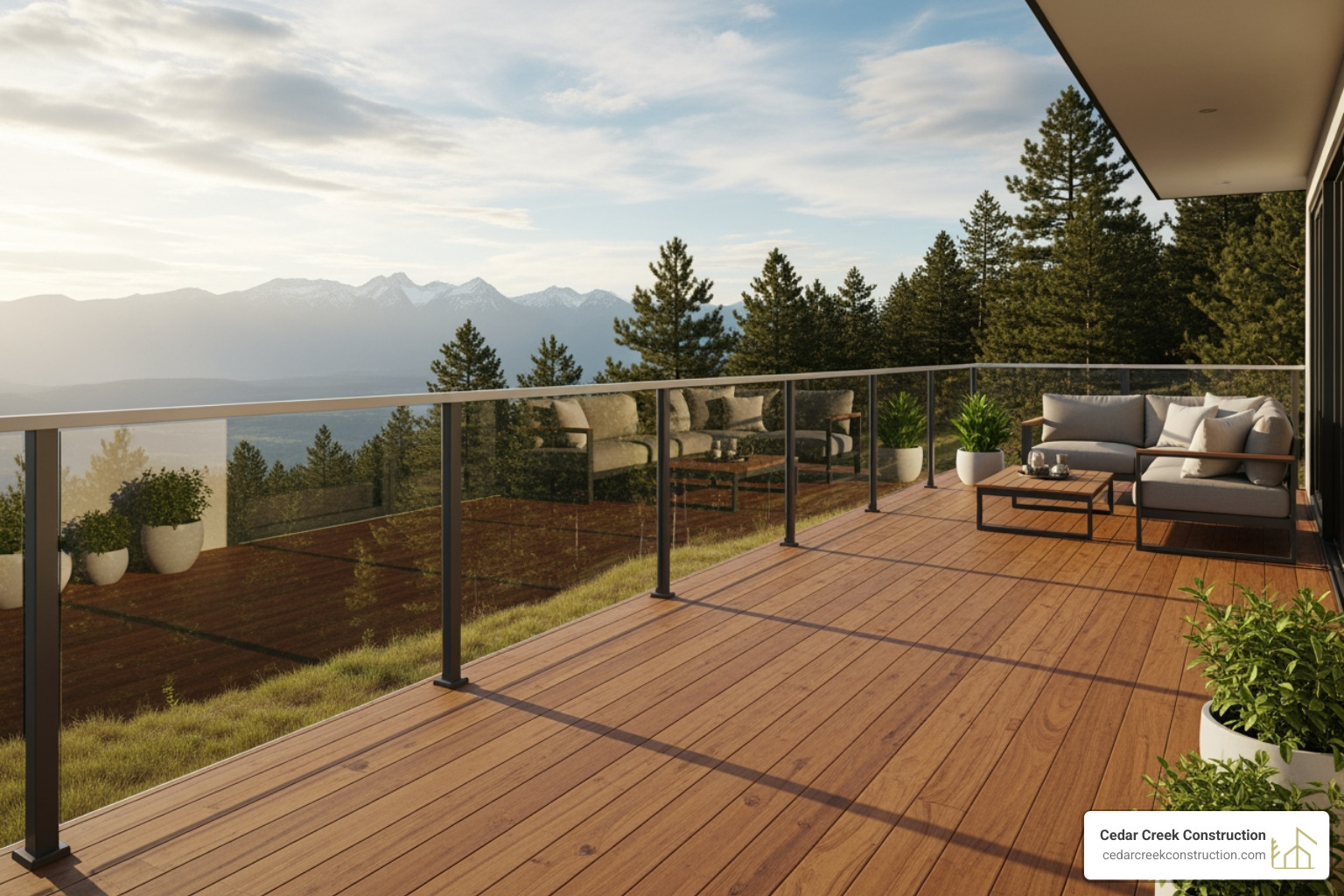
This versatility means you can easily achieve a sleek, modern aesthetic or complement classic home styles.
Popular Railing System Types
The beauty of aluminum deck railing lies in its ability to adapt to diverse design preferences through various infill types:
- Picket railing: The most common and often most affordable option, featuring vertical aluminum balusters for a classic look with excellent safety. Brands like Superior Aluminum offer popular picket series.
- Cable rail systems: For an industrial-chic or contemporary vibe, cable railing uses thin, horizontal stainless steel cables between aluminum posts, providing a modern look with minimal obstruction.
- Glass panel railing: To maximize your view, tempered glass panels are held in aluminum frames, offering a minimalist feel and an unobstructed panorama. This is popular for decks overlooking scenic areas in the Lehigh Valley.
- Horizontal balusters: A modern twist on the traditional picket, horizontal balusters offer a distinctive linear aesthetic.
- Drink rail: A functional and stylish option, the drink rail integrates a top rail wide enough to hold beverages, often using a matching deck board for a seamless look.
Leading Brands and Design Trends
When it comes to aluminum deck railing, several brands stand out for quality and innovation. We work with and recommend brands known for their commitment to durability and design.
- Deckorators: A leader in outdoor living, Deckorators offers stylish and robust aluminum railing, including pre-assembled options like the Rapid Rail system for efficient installation. You can see their offerings at Deckorators Contemporary Aluminum Deck Rail.
- TimberTech: Known for high-performance materials, TimberTech provides aluminum railing systems like Impression Rail and Impression Rail Express, which offer customization for contemporary and classic styles.
- Westbury: Westbury systems are celebrated for their rigorous powder-coating process, ensuring exceptional durability. They offer diverse series like Tuscany (timeless), Montego (curved balusters), and Riviera (distinctive three-rail design).
Current design trends in aluminum deck railing lean towards minimalist designs with black and bronze finishes. These colors provide a sophisticated contrast to most decking materials. Another growing trend is integrated LED lighting in the railing posts or under the top rail, which adds ambiance, improves safety, and extends your deck’s usability into the evening. These trends help homeowners in Center Valley and Allentown create personalized and stunning outdoor spaces.
Installation and Maintenance: What to Expect
While the thought of a new deck railing might bring visions of complex construction, aluminum deck railing systems are designed with ease in mind, whether you opt for a DIY approach or professional installation.
Many manufacturers offer DIY-friendly kits and pre-assembled panels, which can significantly speed up the installation process. Deckorators, for example, highlights their “Pre-assembled Aluminum Rail” and “Rapid Rail” system, emphasizing quick installation thanks to features like drop-through balusters and two-piece rails and brackets. TimberTech’s Impression Rail Express is also noted for being an easier option for DIY enthusiasts.
However, for us at Cedar Creek Construction, we generally recommend professional installation for aluminum deck railing in the Lehigh Valley. While kits are helpful, ensuring structural integrity, perfect alignment, and strict adherence to local building codes are paramount for safety and longevity. A professional installer has the experience and specialized tools to guarantee a flawless and secure result.
Installation Considerations
When installing aluminum deck railing, whether it’s a DIY project or handled by our expert team, several key considerations come into play:
- Post mounting: Railing systems rely on securely mounted posts. Options include posts with plates, core-drilled posts, or post sleeves. Brands like Westbury offer various post kits and accessories. Deckorators Rapid Rail works with specific 2½-inch and 4-inch aluminum post kits, ensuring compatibility and stability. Proper attachment to the deck frame, often using methods like steel plate attachments, is crucial to reinforce the railing’s ability to support direct weight and prevent movement.
- Bracket systems: Modern aluminum railings often use clever bracket systems for attaching rails to posts, simplifying assembly while maintaining strength.
- Stair railing kits: Don’t forget your stairs! Many brands offer matching stair railing kits to ensure a cohesive look and consistent safety standards throughout your deck.
- Code compliance: This cannot be overstated. All railings must meet local building codes, including height requirements (at least 36 inches for residential in PA) and pressure resistance (withstanding 40 pounds of direct pressure per square foot). We always ensure our installations in Lehigh Valley, from Coopersburg to Emmaus, are fully code-compliant. To find a reliable local deck builder who understands these nuances, check out our guide on Find a reliable local deck builder.
- Required tools: Even with DIY-friendly kits, you’ll need conventional tools for cutting, drilling, and fastening. For aluminum, a sharp carbide-tipped saw blade is recommended for clean cuts. Always remember safety glasses and protective clothing!
Long-Term Care and Maintenance
One of the biggest advantages of aluminum deck railing is its incredibly simple long-term care. This is where it truly shines compared to wood.
Forget about sanding, stripping, painting, or staining. Your aluminum deck railing won’t need any of that. The robust powder-coat protection applied during manufacturing is designed to withstand the elements without fading, chipping, or peeling.
The required maintenance is refreshingly minimal:
- Simple cleaning: We recommend a simple cleaning once a year in normal environments, or more frequently if there’s heavy soiling.
- Mild detergent: Just wash the railing with a solution of warm water and a mild detergent (like dish soap).
- Soft cloth or sponge: Use a soft cloth or sponge to gently wipe down the surfaces, then rinse thoroughly with water to remove all residues.
That’s it! An annual inspection to ensure all fasteners are tight and no components have been damaged is also a good practice, but beyond that, you’re free to enjoy your deck without the constant chore of railing upkeep. This low-maintenance aspect is a huge win for homeowners in the Lehigh Valley who prefer relaxing to working on their deck.
Frequently Asked Questions about Aluminum Railing
We often get asked similar questions about aluminum deck railing from homeowners in Allentown, Center Valley, and across the Lehigh Valley. Here are some of the most common inquiries, answered simply and directly.
Does aluminum railing rust or corrode?
Absolutely no, aluminum deck railing does not rust or corrode. This is one of its most significant advantages over other metal railing options like steel or wrought iron. Aluminum is a popular metal for railing precisely because of its inherent rust-resistant properties. The advanced powder-coated finish applied to most quality aluminum railings provides an additional layer of protection, making it incredibly resilient against moisture, humidity, and other corrosive elements in the environment. This makes it an ideal choice for the varying weather conditions we experience in Pennsylvania, ensuring your railing looks great and performs safely for decades without the unsightly orange streaks of rust.
Is aluminum railing safe and code-compliant?
Yes, when properly manufactured and installed, aluminum deck railing is extremely safe and code-compliant. Aluminum is naturally strong and durable, providing a robust barrier for your deck or porch. Reputable brands design their systems to meet or exceed residential building codes. For residential applications in Pennsylvania, this typically means the railing must be at least 36 inches high (if the deck is over 30 inches off the ground) and capable of withstanding 40 pounds of direct pressure per square foot.
Proper post stability is crucial, often achieved through strong attachments to the deck frame (like steel plate attachments) and adequate concrete footings for posts. We ensure all our aluminum deck railing installations meet these stringent safety requirements, giving you complete peace of mind. Even with post extensions, as long as they are used according to manufacturer instructions, the railing remains code-compliant.
How much does aluminum railing cost compared to wood?
Generally, aluminum deck railing has a higher upfront cost compared to a basic pressure-treated wood railing. However, this initial investment is quickly offset by a lower long-term cost and superior value.
While wood might save you a few dollars initially, it demands continuous maintenance expenses for sanding, staining, sealing, and potential repairs or replacements due to rot or warping. These costs add up significantly over time. Aluminum, with its virtually maintenance-free nature, eliminates these recurring expenses. Over the lifespan of your deck, the total cost of ownership for aluminum is often much lower than wood. Furthermore, the durability, modern aesthetic, and minimal upkeep of aluminum deck railing adds more value to your home, making it a smart investment that pays dividends in both enjoyment and property appreciation.
For a detailed breakdown of deck costs in our area, including various materials, consult our Lehigh Valley deck cost guide.
Conclusion
As we’ve explored, aluminum deck railing is a superior choice for homeowners in the Lehigh Valley. Its excellent durability, minimal low maintenance, and sleek modern style make it an intelligent, long-lasting investment. You can enjoy a beautiful, safe, and code-compliant railing for decades without the hassle of painting, staining, or worrying about rust, rot, or splintering.
At Cedar Creek Construction, we are Lehigh Valley experts in crafting outdoor spaces that combine beauty, functionality, and lasting quality. We understand the local climate and building codes in Center Valley, Allentown, Macungie, Emmaus, Easton, and Coopersburg, ensuring your aluminum deck railing system is perfectly suited to your home.
Ready to transform your outdoor oasis with a stunning and resilient aluminum deck railing? Let us help you design and build the deck of your dreams. Contact Cedar Creek Construction today to explore our services and start your project!