The Real Cost Difference Between Composite and Wood Decking
The composite deck vs wood cost debate isn’t just about the initial price tag—it’s about understanding what you’ll actually spend over the life of your deck.
Quick Cost Comparison:
| Factor | Wood Deck | Composite Deck |
|---|---|---|
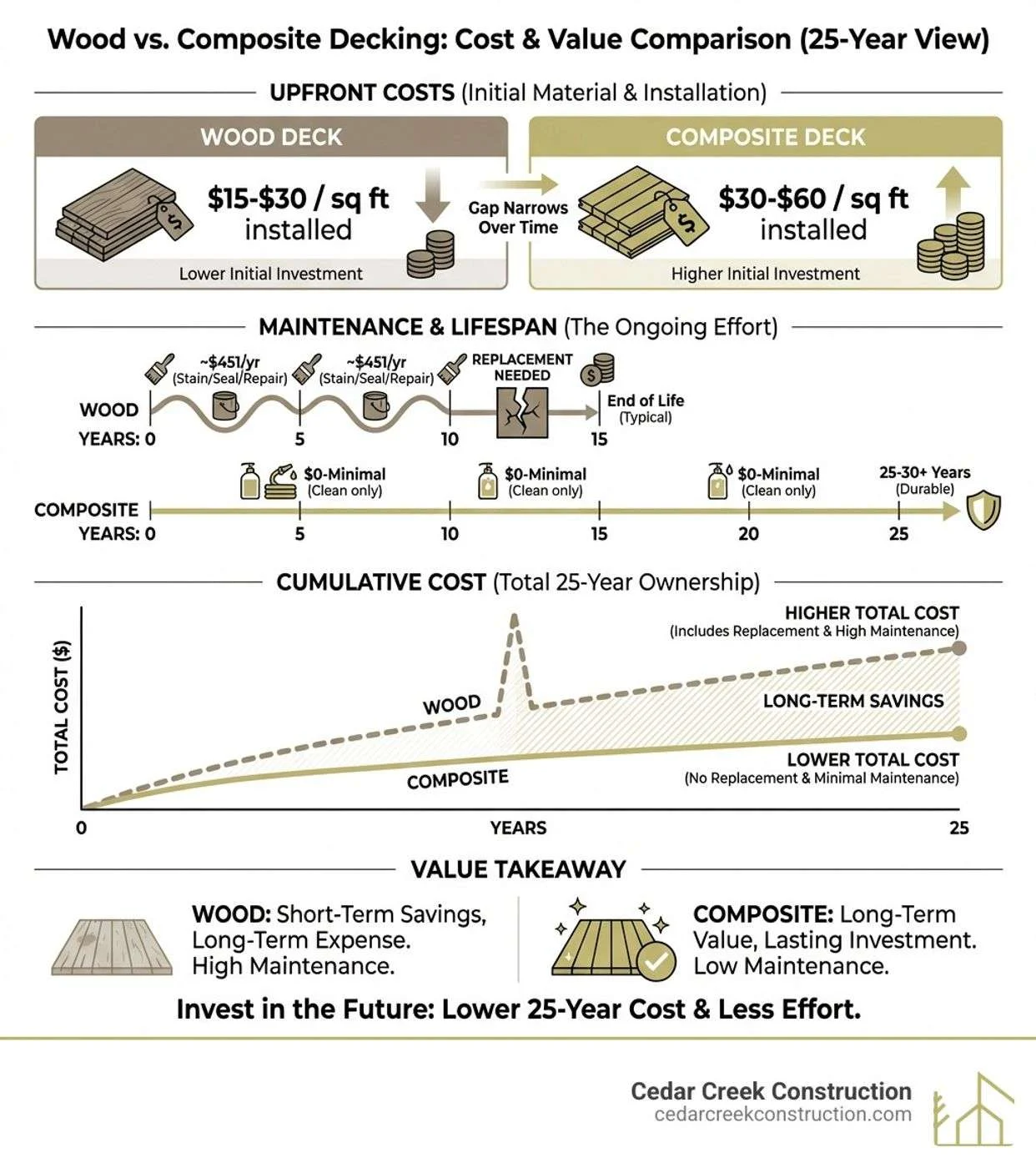
| Initial Cost | $15-$30/sq ft installed | $30-$60/sq ft installed |
| Average Project | ~$18,000 | ~$25,000 |
| Annual Maintenance | ~$451/year | $0-minimal |
| Lifespan | 10-15 years | 25-30+ years |
| Total Cost (25 years) | Higher (includes replacement) | Lower (no replacement needed) |
While wood decks cost $5,000 to $7,000 less upfront, that gap often reverses when you factor in maintenance, repairs, and eventual replacement.
Wood requires staining every 1-2 years, frequent repairs, and replacement around the 10-15 year mark. Composite just needs occasional cleaning and can last 25-30+ years without major upkeep.
The cost of wood has also become less predictable. Lumber prices jumped 275% starting in 2020, making the price difference between wood and composite decking much smaller than it used to be.
As a co-founder of a construction company, I’ve helped countless homeowners steer the composite deck vs wood cost decision by looking beyond the sticker price. Let me break down what you need to know to make the smartest choice for your budget and lifestyle.
The Ultimate Composite Deck vs Wood Cost Breakdown
When building a new deck for your Lehigh Valley home, the conversation often starts with the upfront cost. But the true cost includes materials, labor, hidden expenses, and long-term wear. At Cedar Creek Construction, we want you to have a clear picture to make an informed decision that suits your budget and lifestyle.
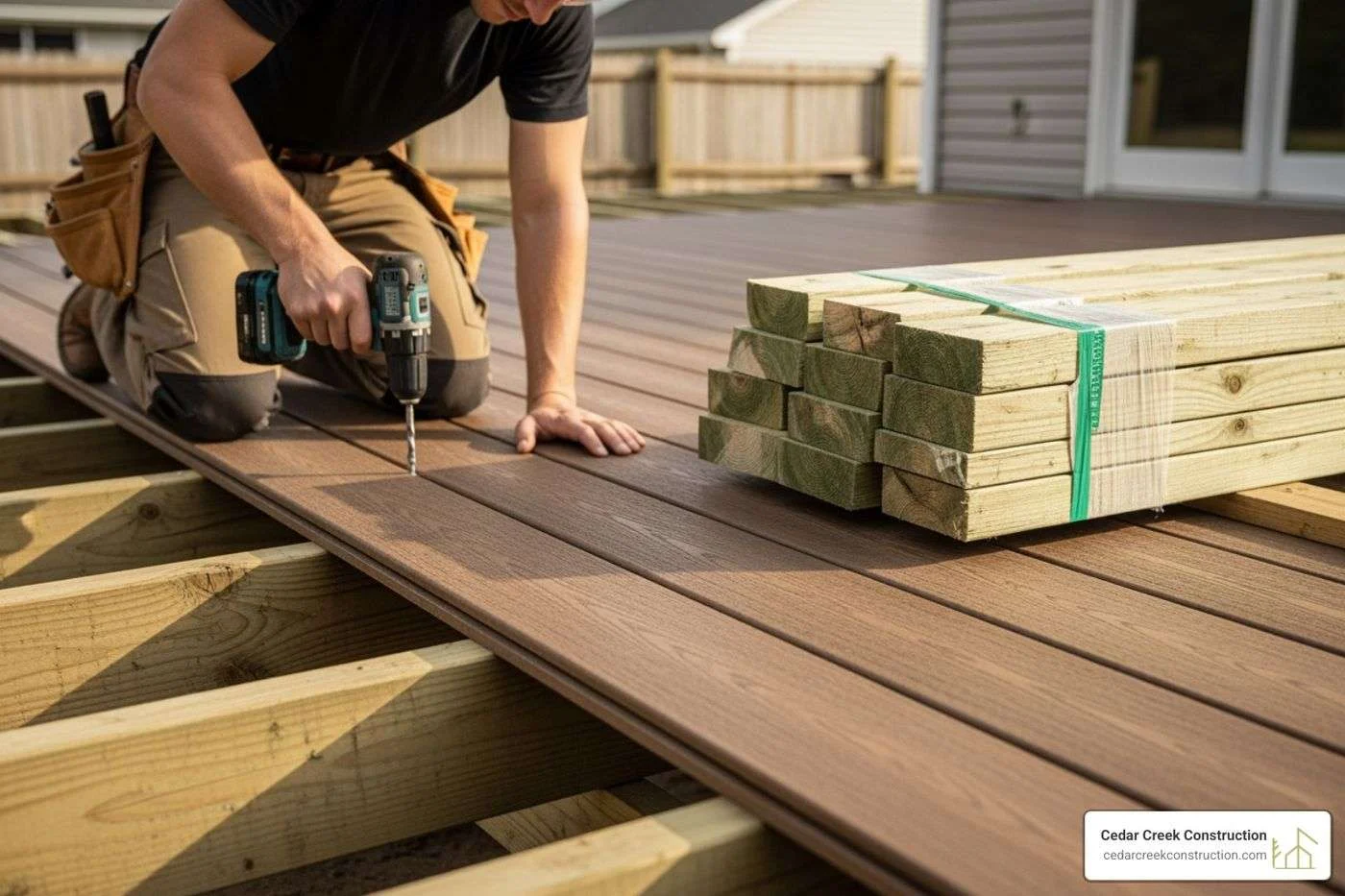
The Initial Bill: Upfront Material and Installation Costs
Let’s start with upfront costs. This is where wood often seems like the winner, but appearances can be deceiving.
According to the Remodeling Magazine cost vs. value report, the average wood deck cost about $18,000 in 2023, while a composite deck was around $25,000. This initial $7,000 difference often makes wood seem more affordable, which it is—at first.
The material costs per square foot can vary significantly:
- Pressure-Treated Wood: This is typically the most budget-friendly wood option, with average materials costing around $4 – $25 per square foot. Installed, pressure-treated wood decks might range from $15 to $25 per square foot.
- Cedar Wood: Known for its natural resistance to insects and rot, cedar can range from $4 to $9 per square foot for materials. High-end cedar can even rival lower-quality composites in price.
- Redwood: Another premium wood, redwood typically falls between $4 to $6 per square foot for materials.
- Composite Decking: Materials alone for composite decking can range from $8 to $22 per square foot. Premium brands like Azek Vintage can cost around $15.98 per square foot, while an entry-level composite like Trex Improve® Basics might be around $6.45 per square foot.
Composite materials are more expensive board-for-board, but the project cost isn’t just about the boards.
Labor Costs also influence the price. Wood deck labor runs $15 to $35 per square foot. In contrast, composite deck labor averages $10 to $14 per square foot. This might seem counterintuitive, but composite installation can be less complex, reducing labor hours. However, substructure costs are similar for both materials, as composite decking still requires a wood or steel frame.
A hidden cost for composite is specialized fasteners. Unlike wood’s standard screws, composite often uses color-matched or hidden systems. These add about $0.95 to $1.57 per square foot to your project. It’s not a deal-breaker, but it’s an extra cost to budget for.
Lumber Price Fluctuations: Lumber price volatility is a critical factor. Starting in 2020, wood costs jumped 275%, significantly narrowing the price gap with composite. While lumber prices have stabilized, their unpredictability highlights a key advantage of composite: more stable pricing. This provides greater budget certainty for homeowners throughout the Lehigh Valley.
The Long Game: Factoring in Maintenance and Lifespan
The true financial story unfolds over years of ownership. Here, wood’s initial cost advantage erodes, revealing composite’s long-term value.
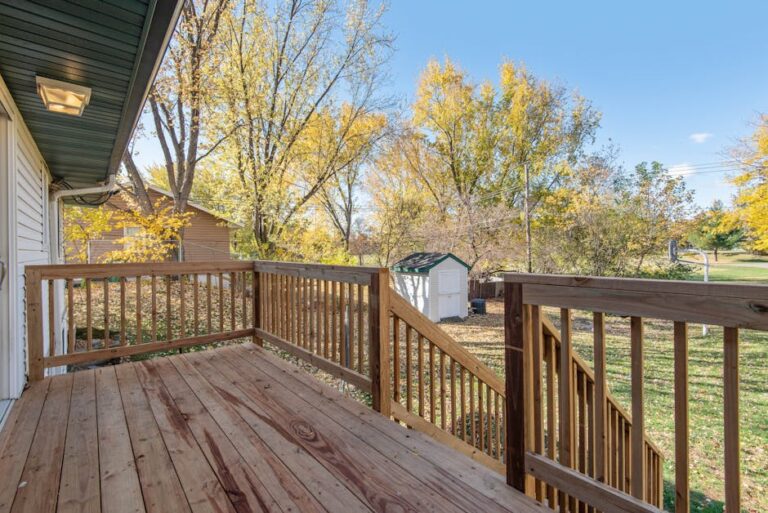
Wood Deck Maintenance: Beautiful wood decks require constant attention. We’ve seen many in Macungie and Emmaus fall into disrepair without regular maintenance, which costs $1 to $5 per square foot annually. This includes:
- Staining/Sealing: This is a non-negotiable task for wood decks, typically required every 1-2 years to protect against moisture, UV damage, and rot. The cost can average around $775.
- Cleaning: Regular power washing and scrubbing are essential to prevent mold and mildew.
- Repairs: Wood is susceptible to rotting, warping, cracking, and splintering, which necessitate frequent repairs.
These costs add up. For pressure-treated lumber, annual maintenance is around $451. Imagine that over a decade or two!
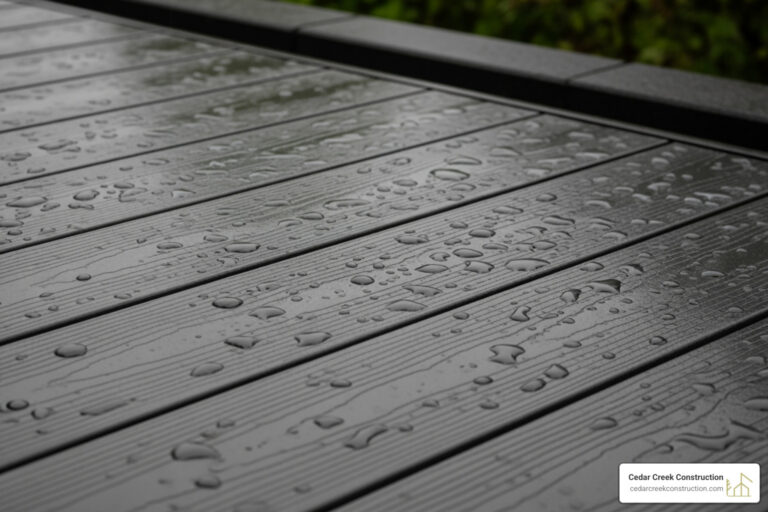
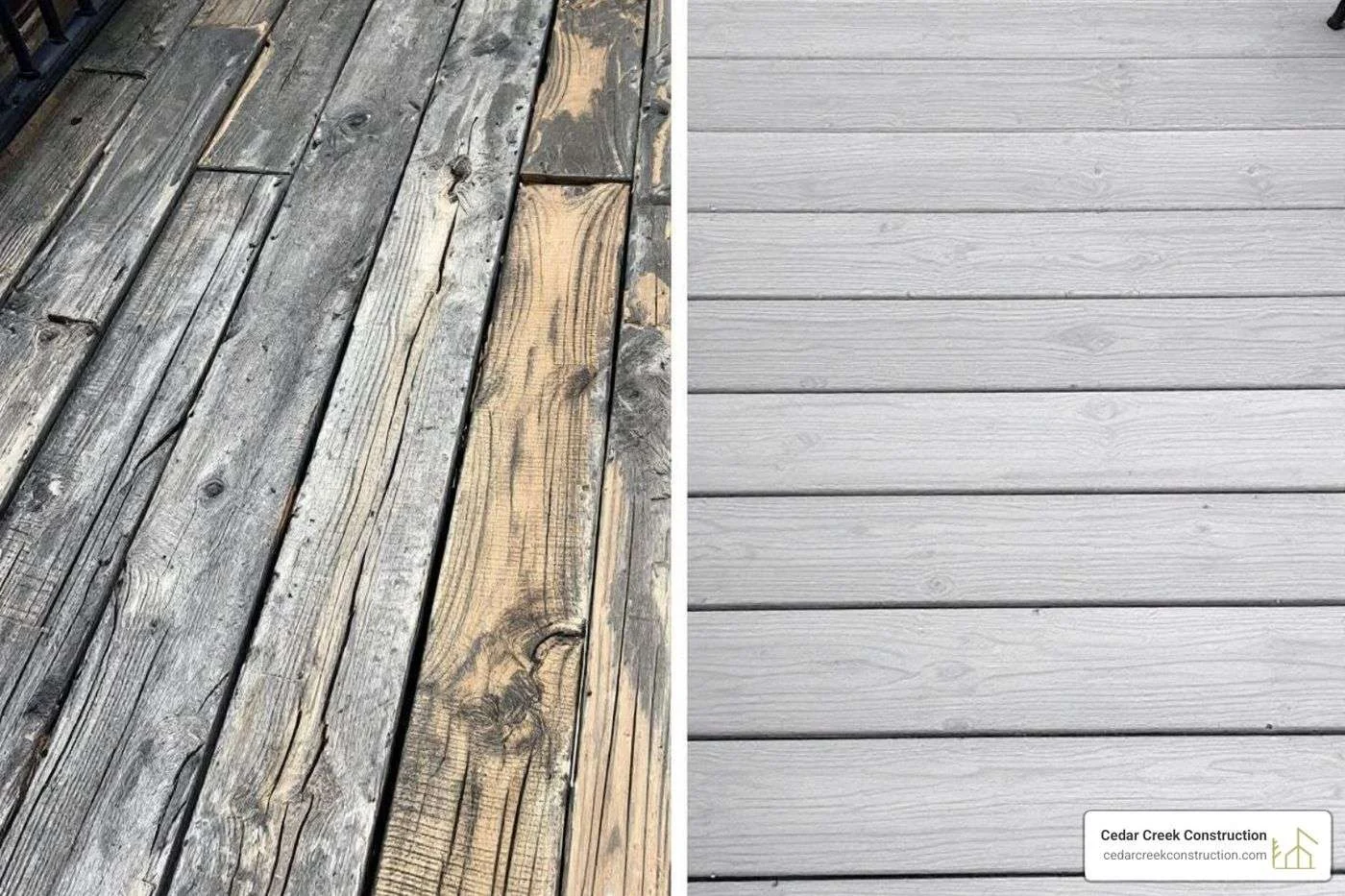
Composite Deck Maintenance: Composite decking shines here with negligible maintenance costs. It never needs staining, sealing, or painting and is engineered to resist rot, warping, and splintering. All that’s needed is occasional soap-and-water cleaning. This freedom from upkeep is a major draw for busy homeowners in Easton and Coopersburg.
Lifespan Comparison: Lifespan is another critical factor in the cost equation.
- The average wooden deck, even with diligent maintenance, has a lifespan of around 10 to 15 years.
- The average composite deck lifespan is at least 25 to 30 years, with some manufacturers offering warranties of 25 to 50 years.
This extended lifespan makes composite more resistant to the elements. It’s impervious to mold, a primary destroyer of wood. Unlike wood, composite maintains its color because the pigment is integral to the board. The absence of splinters is also a huge safety advantage for families.
For more information on materials that stand the test of time, you can explore our resources on the Best Durable Deck Material.
Total Cost of Ownership: The True Composite Deck vs Wood Cost
Let’s look at the total cost of ownership (TCO). This is where composite’s initial sticker shock gives way to a pleasant long-term surprise.
Total Cost of Ownership Comparison (Rough Estimates for a 300 sq ft deck):
| Factor | Wood Deck (Pressure-Treated) | Composite Deck (Mid-Range) |
|---|---|---|
| Initial Installation Cost | $4,500 – $9,000 | $9,000 – $18,000 |
| Using average installed rates of $15-$30/sq ft for wood, $30-$60/sq ft for composite. | ||
| Annual Maintenance Cost | $451 | $0 – $50 (for occasional cleaning supplies) |
| Maintenance Cost (15 years) | $6,765 | $0 – $750 |
| Replacement Cost (after 15 years) | $4,500 – $9,000 | N/A (lasts 25-30+ years) |
| Total Cost (15 years) | $15,765 – $24,765 | $9,000 – $18,750 |
| Total Cost (25 years) | $20,275 – $33,500 (includes 1 replacement + 10 yrs maint) | $9,000 – $19,250 |
Note: These are estimates and can vary based on material quality, labor rates in the Lehigh Valley, and specific maintenance practices.
As the table shows, wood’s upfront savings are quickly lost to maintenance. By year 15, a composite deck often breaks even or becomes cheaper. Over 25 years, the savings are significant, as you avoid the cost of a full deck replacement.
This long-term financial advantage is a powerful argument for composite. We tell our clients in Allentown and Macungie that a composite deck is an investment in peace of mind and leisure time, saving money and hours of upkeep.
Making the Right Choice for Your Lehigh Valley Home
Choosing between composite and wood is a personal decision where informed choices lead to lasting satisfaction. Beyond the numbers, consider aesthetics, environmental impact, and your home’s value.
Value Beyond the Price Tag: Aesthetics, Sustainability, and ROI
The look and feel of your deck are paramount, as it’s an extension of your home for relaxation and entertaining.
Aesthetics:
- Natural Wood Look: For many, the classic, authentic feel of real wood is irreplaceable. Hardwoods like redwood or cedar offer a rustic, high-quality appearance. Wood can also be stained or painted, although this requires ongoing effort.
- Composite Color Variety: Modern composite products mimic the grain and texture of natural wood, offering a wide array of colors that remain consistent over time. Brands like Trex offer collections like the new Trex Signature decking collection that compete with expensive hardwoods. The beauty of composite is that the color is “set it and forget it” – no fading or repainting needed.
Sustainability and Environmental Factors:
- Eco-Friendly Materials: Many composite brands use recycled materials, like plastic film and reclaimed sawdust. This makes composite a more environmentally friendly option, preventing waste and requiring fewer chemicals for upkeep.
- Deforestation Concerns & Chemical Treatments: While wood is a renewable resource, concerns about sustainable forestry exist. Wood decks also require heavy chemical treatments for waterproofing and pest resistance, which composite avoids.
Return on Investment (ROI) and Resale Value:
- A well-maintained deck adds value to your home. However, composite’s longevity and low maintenance often mean a higher ROI. A composite deck looks better longer, requires less effort from future owners, and won’t need replacement as quickly, making it a significant selling point in the Lehigh Valley. Its lower total cost of ownership adds to its long-term value.
Key Factors in the Composite Deck vs Wood Cost Decision
When weighing the composite deck vs wood cost for your Center Valley, PA home, consider these factors:
- Budget Constraints: What can you afford upfront? If the initial cost is the top priority, wood might seem appealing, but remember the long-term financial commitment.
- Personal Time for Maintenance: Are you willing to invest time in annual upkeep? If you prefer a “set it and forget it” approach, composite is the clear winner.
- Desired Aesthetic: Do you prefer the organic feel of natural wood or the consistent, modern look of composite?
- Safety (Splinters): For families with children or pets, the splinter-free nature of composite offers significant peace of mind.
- Environmental Impact: If using recycled materials and minimizing chemical treatments is important, composite often aligns better with these values.
- Local Climate Considerations: In the Lehigh Valley, composite handles our four seasons with ease, resisting warping and cracking far better than wood.
Understanding these factors helps you choose the best material. For more guidance, read our comprehensive guide on How to Choose the Best Material for Your New Deck.
Build Your Dream Deck with Lehigh Valley Experts
Navigating the composite deck vs wood cost comparison can be overwhelming, but you don’t have to do it alone. At Cedar Creek Construction, we help homeowners across the Lehigh Valley—from Allentown to Easton—build their dream outdoor living spaces.
Our team combines expertise with craftsmanship to deliver custom, high-quality solutions. We’ll work with you to understand your budget, style, and maintenance needs, providing a professional consultation to guide your material choice.
Whether you want a classic wood deck or a low-maintenance composite oasis, we ensure your project is completed with superior quality. We pride ourselves on transparent pricing and helping you make the smartest long-term investment.
Ready to explore the possibilities for your backyard? Contact us today for a free estimate and let us help you bring your vision to life. Get a quote for your new composite deck and start enjoying your outdoor space sooner than you think!