Understanding the Reality of Composite Deck Safety
Anti slip coating for composite decking is a key solution for a common problem: even “low-maintenance” decks can become surprisingly slippery. While composite decking resists rot and splinters, it’s not immune to slipperiness from rain, biofilm, or debris.
Quick Answer: Top Anti-Slip Solutions for Composite Decking
- Anti-slip coatings – Clear sealers with aggregate or textured paints that add traction (Static Coefficient of Friction: ≥0.85 wet)
- GRP decking strips – Mechanically fixed strips with a gritty surface (Pendulum Test Value: 60-82 wet)
- Preventive measures – Choose textured composite boards with embossed or grooved finishes (PTV 36+ required)
- Regular maintenance – Clean away debris, biofilm, and moisture that create slippery conditions
The good news is that you can significantly improve your deck’s safety. Understanding why your deck becomes slippery is the first step to solving the problem effectively.
I’m Matt Strunk, co-founder of Cedar Creek Construction. I’ve helped many homeowners in the Lehigh Valley transform their decks into safe outdoor living spaces. This guide will walk you through everything you need to know to protect your family and guests from slips and falls.
Why Your Composite Deck Becomes a Slip Hazard
Even the most beautiful composite deck can become a slip hazard. While celebrated for durability, composite isn’t immune to the natural causes of slick surfaces. Understanding these culprits is key to keeping our outdoor spaces in the Lehigh Valley safe.

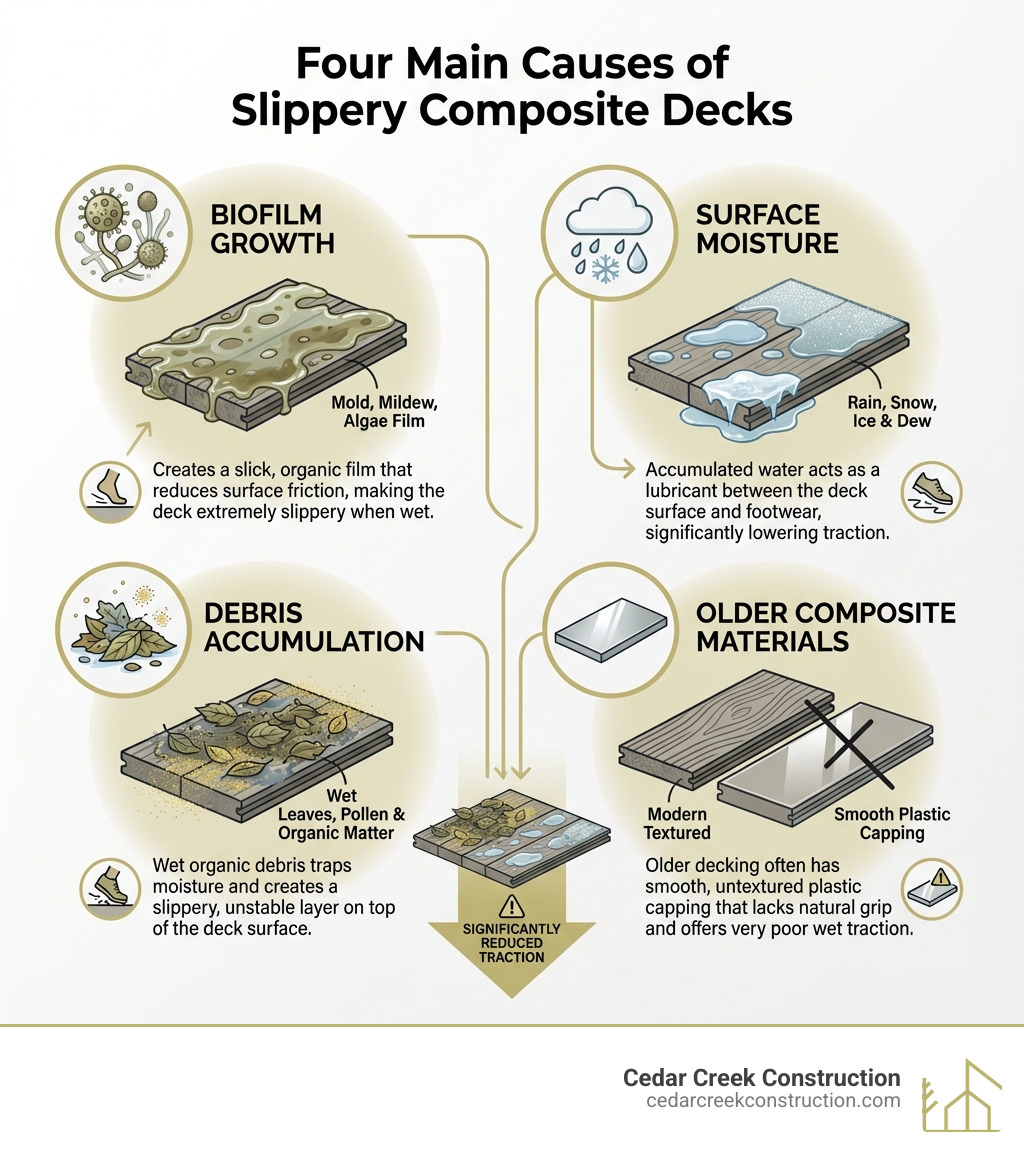
The primary reasons your deck becomes slippery are:
- Biofilm Growth: Mold, mildew, and algae are the most common culprits. These organisms thrive in damp, shaded areas, forming a slimy film on the deck surface that drastically reduces traction.
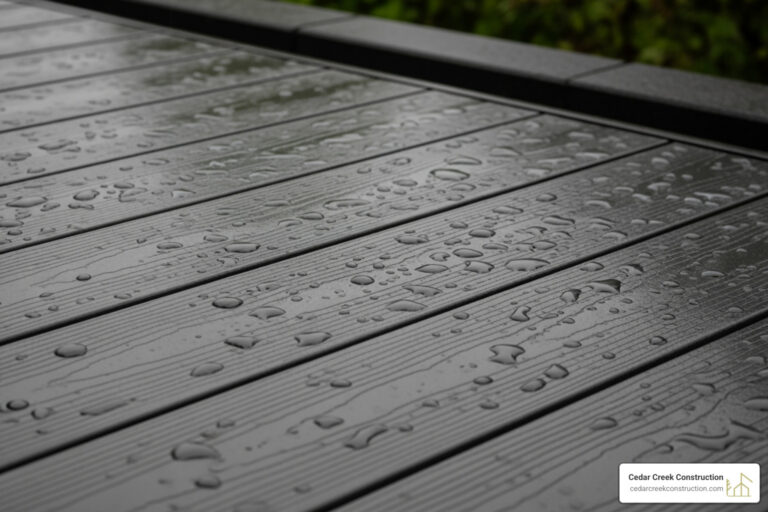
- Surface Moisture: Rain, snow, ice, and even morning dew act as lubricants, reducing the friction needed for secure footing. Frozen moisture is especially treacherous.
- Debris Accumulation: Wet leaves, pollen, and other organic matter create a slick layer. This debris also traps moisture and encourages biofilm growth, worsening the problem.
Compared to wood, the slipperiness of composite decking is nuanced. Older, smooth-capped composite decks were often slippery. However, modern composite materials are engineered with textures for superior slip resistance. While porous wood can sometimes offer grip when wet, it’s also more prone to biofilm growth and rot, creating different safety hazards.
Preventing slips starts with recognizing these hazards. For those in Center Valley, Coopersburg, or Allentown considering a new deck, we at Cedar Creek Construction can guide you in selecting the best materials. Find more about your options by visiting our guide on How to Choose the Best Material for Your New Deck.
Proactive Measures for a Slip-Resistant Deck
You can take many proactive steps to keep your composite deck safe and enjoyable year-round, from choosing the right material to performing diligent maintenance.
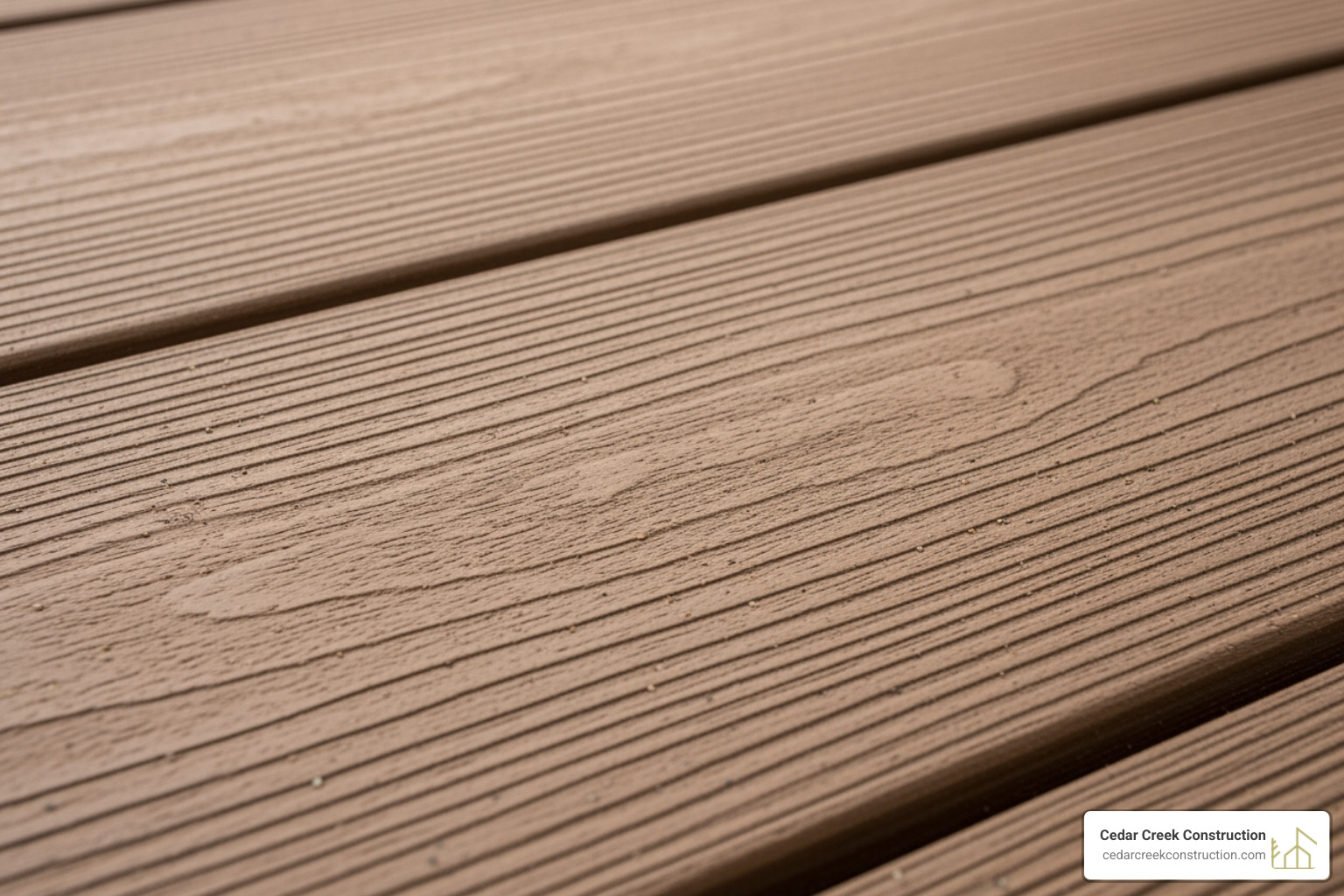
Inherently Slip-Resistant Decking
A safer deck begins with the material itself. Modern composite decking has evolved to include features that improve grip.
- Embossed Textures: Look for boards with embossed wood grain patterns. These create a varied surface that provides better grip, especially when wet.
- Grooved Finishes: Some boards feature grooves that channel water and increase traction. Reversible boards may offer different groove patterns on each side.
These design innovations make modern composite decking an inherently anti-slip choice. Learn more about its advantages by reading What Makes Composite Decking Ideal for Your Home?.
Safety Standards and Pendulum Test Value (PTV)
The Pendulum Test Value (PTV) is a key metric for measuring a surface’s slip resistance. For a surface to be considered slip-resistant, it must have a PTV of 36 or higher. High-quality composite decking can achieve PTV ratings of 53 or more even in wet conditions, indicating an excellent level of safety.
Regular Maintenance for Ongoing Safety
Even the best decking requires maintenance to stay safe.
- Regular Cleaning: Periodically wash your deck with mild soap and water to prevent biofilm buildup. For stubborn algae, a mixture of white vinegar and baking soda can work, but always test a small area first.
- Debris Removal: Regularly sweep or blow leaves, pollen, and other organic debris off the deck. This prevents a slick layer from forming when wet.
- Proper Drainage: Ensure water can drain properly. A slight slope, installed from the start, and clear gaps between boards are crucial to prevent water from pooling.
For a comprehensive guide on keeping your outdoor spaces in top shape, refer to The Cedar Creek Maintenance Guide.
A Comprehensive Guide to Anti-Slip Coating for Composite Decking
If proactive measures aren’t enough, an anti slip coating for composite decking can significantly improve safety. These specialized coatings provide an extra layer of protection against slips and falls.
Benefits of Coatings
Applying an anti-slip coating offers several benefits:
- Improved Traction: The primary advantage is an immediate increase in surface grip, making the deck less slippery, even when wet.
- Peace of Mind: Knowing your deck is safer is especially important for families with children, elderly guests, or pets.
- Improved Durability (for some): Some coatings also offer protection against UV rays and wear, extending the aesthetic life of your deck.
Types of Coatings
There are a few main types of anti slip coating for composite decking:
- Clear Sealers with Aggregate: These transparent coatings contain fine particles (like silica or polymer grit) that create a textured surface without significantly altering the deck’s appearance.
- Textured Paints: These opaque paints have anti-slip additives mixed in. They offer both color and texture, ideal for refreshing an older deck’s appearance while adding grip.
- Anti-Slip Additives: These are granular additives you can mix into your preferred paint or sealer, allowing you to customize the level of grit.
Coating Types and Their Properties
- Clear Sealers with Aggregate:
- Properties: Maintain original deck color, provide subtle texture, often UV resistant.
- Best for: Decks where aesthetics are key; slight to moderate slipperiness.
- Considerations: Requires frequent stirring during application to keep aggregate suspended.
- Textured Paints:
- Properties: Opaque finish, provides color and strong texture, durable.
- Best for: Decks needing a color refresh; significant slipperiness.
- Considerations: Completely alters deck appearance; may show wear in high-traffic areas.
- Mix-in Additives:
- Properties: Versatile, allows customization of grit level.
- Best for: Use with preferred paints/sealers.
- Considerations: Requires careful mixing for even distribution.
Potential Downsides
- Appearance Changes: Even clear coatings can add a slight sheen. Textured paints will completely change the look.
- Longevity Concerns: Outdoor coatings wear down over time from UV rays, moisture, and foot traffic, requiring reapplication.
- Warranty Impact: This is critical. Applying a coating can void your deck’s warranty. Always consult your decking manufacturer first for approved products.
If you have concerns about your existing deck, our team at Cedar Creek Construction is ready to help. We also offer expert Deck Repairs to ensure your deck is structurally sound before coating.
How to Apply an Anti-Slip Coating for Composite Decking
Correct application is crucial for effectiveness and longevity.
- Prepare the Surface: This is the most critical step. The deck must be completely clean, dry, and free of debris, mold, or grease. Start by sweeping, then wash the deck with a composite-safe cleaner or mild soap and water. Rinse thoroughly and let it dry completely (24-48 hours). Address any necessary Deck Repairs before you begin.
- Gather Your Tools: You’ll typically need a short-nap roller or sprayer, paint trays, stir sticks, painter’s tape, and protective gear (gloves, safety glasses).
- Follow Manufacturer Instructions: Each product has specific instructions for mixing, temperature, application, and drying times. Follow them precisely to avoid poor adhesion or premature failure. Stir coatings with aggregate frequently.
- Apply Thin, Even Coats: Two thin coats are better than one thick coat. This ensures better adhesion and a more uniform finish. Allow for the recommended drying time between coats.
- Allow Adequate Drying Time: Respect the full curing time before allowing foot traffic or replacing furniture. This ensures the coating fully hardens and bonds to the surface.
For general non-slip deck paint options, you can explore offerings at stores like Non Slip – Deck Paint – The Home Depot . Always verify product compatibility with composite decking.
Evaluating the Long-Term Effects of an Anti-Slip Coating for Composite Decking
Consider the long-term implications before applying a coating.
- Durability and Reapplication: The lifespan depends on product quality, traffic, and weather. Expect to reapply every few years to maintain effectiveness.
- Peeling or Flaking: Improper surface prep is the main cause of peeling and flaking, which compromises both the look and safety of the deck.
- Cost-Effectiveness: While a coating is cheaper upfront than deck replacement, the recurring cost of reapplication can add up. Compare this to the one-time investment in high-grade, textured composite decking.
- Trapped Moisture: A non-breathable coating can trap moisture, leading to bubbling or mold growth underneath. Choose a quality, breathable product.
- Maintenance: Coated surfaces may require specific cleaning methods. Ensure your cleaning routine is compatible with the coating and your deck manufacturer’s guidelines, like those from Trex.
Alternative Anti-Slip Solutions
Coatings are popular, but they aren’t the only way to improve deck safety. Several other effective options are available.
| Solution Type | Effectiveness | Aesthetics | Cost (Relative) | Installation |
|---|---|---|---|---|
| Anti-Slip Coatings | Good (PTV can vary) | Can alter appearance (sheen, color, texture) | Medium | DIY-friendly, requires prep and drying time |
| Decking Strips (GRP) | Excellent (PTV 60-82 wet for some products) | Visible strips, can be color-matched | Medium-High | Mechanical fixing, requires drilling |
| Non-Slip Stair Treads | Excellent (especially for stairs) | Integrated or add-on, can be high-contrast | High | Often DIY, can involve adhesive or mechanical fix |
| Interlocking Mats | Good (instant traction) | Functional, less integrated look | Low-Medium | Lay-down, temporary |
| Outdoor Runners | Good (for pathways) | Can be decorative, but may shift | Low | Lay-down, temporary |
Anti-Slip Decking Strips
These are an excellent retrofit solution, especially for high-traffic areas.
- GRP Strips: Made from Glass Reinforced Plastic, these durable strips have a coarse, gritted surface for superior traction. They are mechanically fixed to the deck, offering a secure, long-lasting solution with excellent slip resistance ratings. An example is the Anti-Slip Decking Strip | NeoTimber® Composite Decking , which is designed to fix onto composite boards.
Non-Slip Stair Treads
Stairs are the most hazardous part of a deck. Non-slip stair treads provide targeted grip where it’s needed most.
- ComposiGrip: Products like those from Composite Non Slip Stair Treads | Slip Resistant | ComposiGrip offer premium composite stair solutions engineered for durability and slip resistance. They are often easy to install and cut to size.
Interlocking Mats and Outdoor Runners
For a less permanent solution, mats and runners are effective.
- Interlocking Mats: These rubber or plastic mats can be laid in specific high-traffic zones. They are easy to install, remove, and clean.
- Outdoor Runners: Runners provide a non-slip path along the deck. They come in various designs but may require adjustment to stay in place.
These alternatives offer flexible and targeted slip resistance for any composite deck in the Lehigh Valley.
Frequently Asked Questions about Deck Safety
We often get questions from homeowners in the Lehigh Valley about deck safety. Here are some common inquiries.
Is composite decking more slippery than wood?
Not necessarily. While older, smooth composite decks could be slippery, modern boards are designed with embossed or grooved textures for better traction. Wood is porous and prone to deep-seated biofilm growth that makes it very slick. Capped composite decking repels moisture and is easier to clean, often making it the less slippery option when properly maintained. For more details on how they compare in our climate, see our guide: Trex vs. Wood Decking: What’s the Best Choice for Pennsylvania Weather?.
Can I use anti-slip tape on my composite deck?
Yes, anti-slip tape can be an effective temporary solution, especially for stairs. It provides immediate grip in wet or icy conditions. However, it is a temporary fix. Over time, the adhesive can degrade from sun and foot traffic, causing the tape to peel and create a new tripping hazard. Always check your decking manufacturer’s guidelines, as some adhesives may damage the surface or void your warranty.
How do I safely remove ice from a composite deck?
- Use Plastic Shovels Only: Metal shovels can easily scratch or gouge your composite decking. For light snow, a broom is often sufficient.
- Avoid Rock Salt: Traditional rock salt (sodium chloride) can leave white stains and corrode fasteners. Abrasive materials like sand can also scratch the surface.
- Use Recommended Ice Melts: We recommend using calcium-chloride-based ice melts, which are effective and generally safe for composite decking. You can find options like Calcium-chloride ice melts at home improvement stores.
- Rinse After Use: Once the ice has melted, rinse the deck with warm water to remove any residue from the ice melt product.
Conclusion: Step Confidently on Your Safe and Secure Deck
A safe deck is essential for protecting your family and guests. We’ve covered how to prevent slips, from choosing textured decking and performing regular maintenance to applying an anti slip coating for composite decking or using alternatives like GRP strips.
The best approach is proactive: start with slip-resistant materials and keep your deck clean. When you need extra grip, choose a quality solution and apply it correctly, always checking your manufacturer’s warranty first.
At Cedar Creek Construction, we’re committed to building beautiful and secure outdoor living spaces for our neighbors in Center Valley and across the Lehigh Valley. If you’re looking to improve your deck’s safety or plan a new project, our team has the expertise to help.
Don’t let a slippery deck ruin your outdoor enjoyment. Contact us today to ensure you can step confidently on a safe and secure deck.